
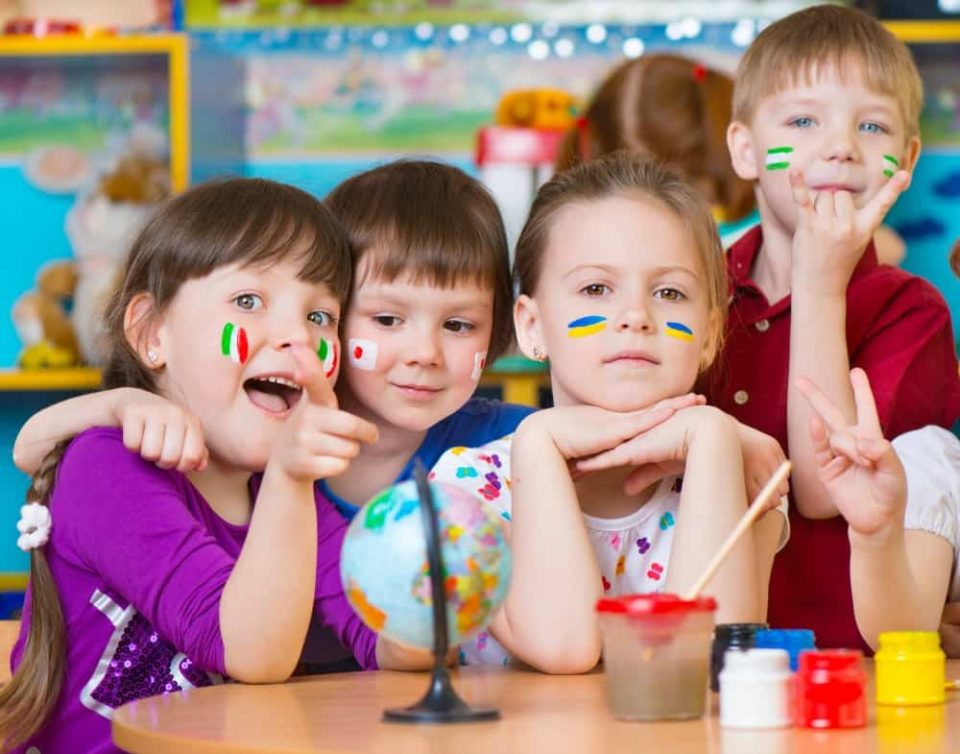
Language is far more than a tool for communication. It is the fundamental framework through which human beings organize thoughts, build social connections, and interpret the world. In an increasingly globalized society, the ability to speak, read, and write in more than one language has evolved from a practical asset into a profound developmental advantage. For young learners, acquiring a second language during early childhood is exceptionally effective due to the natural adaptability of the developing brain.
Bilingual education models—which deliver academic instruction in two distinct languages—go beyond simple vocabulary instruction. They immerse children in dual-linguistic environments that challenge cognitive processing, enrich cultural understanding, and establish strong foundations for lifelong academic and professional achievement. Investing in dual-language education delivers comprehensive benefits that shape a child’s cognitive, social, and academic growth.
Cognitive Growth and Brain Development
The human brain undergoes rapid neural development during childhood. Introducing a second language during these formative years triggers significant structural and functional adaptation within neural networks. Managing two linguistic systems simultaneously requires constant subconscious filtering, selection, and switching, providing a continuous mental exercise that strengthens overall executive function.
-
Enhanced Executive Control: Executive function refers to the suite of cognitive processes that includes working memory, mental flexibility, attention management, and abstract reasoning. Bilingual children regularly practice switching between two language frameworks, which translates into an enhanced capacity to focus on complex tasks, ignore distracting sensory input, and adapt to changing instructions.
-
Superior Problem-Solving and Cognitive Flexibility: Navigating two languages encourages flexible mental processing. Research indicates that bilingual students frequently outperform monolingual peers on tasks requiring creative problem-solving, pattern recognition, and conceptual flexibility because their brains are accustomed to viewing information through multiple structural lenses.
-
Delayed Cognitive Decline in Later Life: The neural pathways constructed through early bilingualism contribute to cognitive reserve—the brain’s resilience to neuropathological damage. While this benefit manifests much later in life, the foundational neural density established through childhood bilingualism offers lifelong protection, delaying the onset of age-related cognitive decline and memory impairment.
Superior Academic Achievement Across Subjects
A common misconception among parents is that learning two languages simultaneously delays reading development or confuses young learners. Decades of educational research disprove this myth. While bilingual children may occasionally mix vocabulary across languages during early developmental stages, this phenomenon—known as code-switching—is a natural sign of complex linguistic processing rather than confusion.
Over the long term, children enrolled in structured dual-language immersion programs consistently perform at or above grade level on standardized academic assessments across core subjects, including mathematics, reading comprehension, and science.
Strengthened Meta-Linguistic Awareness
Learning a second language forces children to analyze how language works as a system. Bilingual students develop superior meta-linguistic awareness—the ability to think critically about language structure, grammar rules, word origins, and syntax. This heightened structural understanding allows bilingual children to master reading, writing, and vocabulary acquisition in their primary language faster and with greater precision.
Seamless Transfer of Literacy Skills
Literacy concepts are not language-specific. Once a child grasps core reading comprehension strategies—such as identifying main themes, drawing inferences, decoding phonics, and understanding narrative structure—in one language, those conceptual skills transfer effortlessly to the second language. Rather than doubling the learning workload, bilingual education builds a unified, highly adaptable literacy foundation.
Cultivating Cultural Empathy and Social-Emotional Skills
Language and culture are deeply interconnected. When children learn a second language, they do not merely acquire new words; they gain access to unique cultural perspectives, idiomatic expressions, historical narratives, and social norms. This dual exposure fosters strong interpersonal skills and social-emotional maturity.
-
Fostering Broad Global Perspectives: Bilingual education exposes children to diverse cultural traditions early in life, teaching them that their personal worldview is one of many valid perspectives. This early exposure reduces prejudice, breaks down cultural stereotypes, and nurtures open-minded, inclusive global citizens.
-
Enhanced Perspective-Taking and Empathy: Operating in two language environments requires children to monitor social context continuously to determine which language to use with different speakers. This practice strengthens perspective-taking skills, allowing bilingual children to read social cues accurately, anticipate others’ needs, and demonstrate higher levels of interpersonal empathy.
-
Preserving Family Heritage and Intergenerational Bonds: For children raised in immigrant or multicultural households, bilingual education protects heritage language proficiency. Maintaining fluency in the family native language allows children to communicate deeply with grandparents, extended family members, and community elders, preserving cultural identity and reinforcing family unity.
Long-Term Economic Opportunities and Career Resilience
The advantages of childhood bilingualism extend far into adulthood. As global markets become increasingly interconnected, international corporations, government agencies, non-profit organizations, and educational institutions prioritize professionals who can operate fluidly across cultural and linguistic boundaries.
Bilingual individuals enjoy expanded employment opportunities across diverse sectors, including international business, healthcare administration, software development, diplomatic services, law, and journalism. Beyond broader employability, bilingual professionals frequently command higher starting salaries and earn language differential bonuses compared to monolingual colleagues holding identical technical qualifications. Achieving natural, unaccented fluency is vastly easier during early childhood than during adulthood, giving dual-language students a lasting competitive edge in the workforce.
Essential Models for Delivering Bilingual Education
The success of bilingual education relies on structured, evidence-based instructional frameworks designed to support sustained language growth. Educational institutions primarily utilize three primary models:
-
Two-Way Dual Language Immersion: These classrooms bring together native speakers of the dominant language and native speakers of the partner language in equal numbers. Academic instruction is divided equally between both languages, allowing students to serve as linguistic models for one another and achieve mutual biliteracy.
-
One-Way Foreign Language Immersion: Designed primarily for students who share a single native language, these programs deliver core academic subjects—such as mathematics, science, and social studies—in a second language for a significant portion of the school day.
-
Transitional Bilingual Education: Primarily utilized for English language learners, this model provides initial academic instruction in the student’s native language while gradually increasing instruction in the dominant regional language, easing the academic transition while maintaining concept comprehension.
Integrating dual-language instruction into standard elementary curricula equips young learners with robust cognitive tools, academic resilience, and cultural fluency, preparing them to thrive in an interconnected global community.
Frequently Asked Questions
Does learning two languages simultaneously cause speech delays in young children?
No, research shows that bilingualism does not cause speech or language delays. While a bilingual child total vocabulary is split between two languages during early toddlerhood, their combined vocabulary across both languages matches or exceeds that of a monolingual child of the same age. Milestones such as speaking first words or combining words into sentences occur within the standard developmental timeframe for both bilingual and monolingual children.
What is code-switching, and should parents correct it when children mix languages?
Code-switching occurs when a speaker alternates between two languages within a single sentence or conversation. In developing children, code-switching is a normal, highly sophisticated linguistic strategy used to fill temporary vocabulary gaps or express complex ideas. Parents do not need to correct children harshly; simply modeling the correct word or phrase in a natural, supportive response helps build vocabulary without discouraging conversation.
Can parents who speak only one language support a child in a bilingual education program?
Yes, monolingual parents can support their child’s bilingual education effectively. Parents should focus on establishing strong literacy habits in their native language at home by reading together daily, discussing story concepts, and encouraging rich conversation. The foundational reading comprehension, critical thinking, and study skills developed at home in the native language transfer directly to the second language at school.
What is the best age for a child to start learning a second language?
While language learning can happen at any age, early childhood—from birth through age eight—is considered the optimal window. During early development, the brain exhibits high neural plasticity, allowing young children to acquire phonemes, grammar structures, and native accents intuitively through immersion, much like they learn their native language.
Will a child in a bilingual program fall behind in reading or writing in their native language?
In the early grades of a full immersion program, bilingual students may score slightly lower on standardized native language reading tests compared to monolingual peers simply because less instructional time is spent in that language. However, by fifth or sixth grade, bilingual students typically catch up and frequently outperform monolingual peers on standardized reading assessments due to their superior meta-linguistic awareness.
Is bilingual education beneficial for children with learning differences like dyslexia?
Yes, children with learning differences or developmental conditions can benefit from bilingual education. While learning differences present challenges in any language, research indicates that bilingualism does not exacerbate learning difficulties. The cognitive benefits of managing two languages, such as enhanced working memory and flexible problem-solving, can provide helpful compensatory strategies for students with special educational needs.
How do educators assess academic progress in a bilingual classroom setting?
Educators use specialized formative and summative assessments tailored for dual-language instruction. Progress is evaluated across both languages to measure subject matter mastery alongside language proficiency gains. Assessments track vocabulary growth, reading comprehension, writing mechanics, and verbal communication in both languages, ensuring that academic benchmark goals are met across the curriculum.