
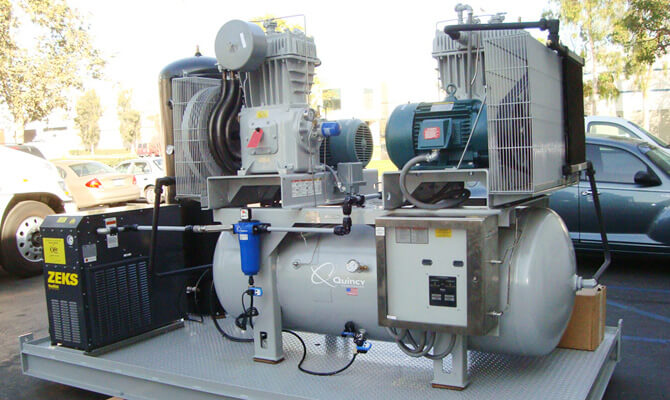
An air compressor is a mechanical device designed to increase air pressure by reducing its volume, serving as essential equipment across countless industrial applications. The two primary categories of air compressors are centrifugal compressors and positive displacement compressors, each suited to different operational requirements. These machines power everything from pneumatic tools and spray painting operations to sophisticated manufacturing processes and automation systems.
Selecting the right air compressor for your industrial facility requires careful consideration of multiple factors. The wrong choice can lead to inefficient operations, excessive energy costs, frequent maintenance issues, and inadequate performance that hampers productivity. With the variety of models, configurations, and specifications available in today’s market, making an informed decision requires understanding both your current needs and anticipated future demands.
When evaluating air compressor options, two fundamental aspects should guide your decision: size and features. Size refers not only to the physical footprint but more importantly to the capacity to meet your facility’s air volume requirements. Features encompass everything from power source and compression technology to controls, monitoring systems, and energy efficiency capabilities. The following comprehensive guide outlines the primary considerations when purchasing an industrial air compressor.
Power Source: Electric or Gas
If the operations of the company are indoors, then it automatically means an electric air compressor option is the way to go. This is because the compressor does not emit any fumes that can destroy the surroundings. In many industrial settings, systems like a rotary screw air compressor are often preferred for indoor use due to their efficiency and ability to provide a continuous air supply. However, operating an electric air compressor is more expensive compared to a gas-powered one. It is useful to decide which option to choose by comparing the two.
Gas-powered compressors offer greater flexibility for outdoor applications, remote job sites, or locations without reliable electrical infrastructure. They typically provide more power per dollar and can operate independently of electrical grids. However, they require proper ventilation, produce emissions, and generally involve higher maintenance demands due to engine components requiring regular servicing.
Also, in terms of portability, an electric air compressor will always need a connecting cable for power and a power socket, most probably fixed on the wall. This tethering can limit placement options and mobility within a facility. Electric models, however, offer quieter operation, lower maintenance requirements, and more consistent performance without the need for fuel management.
The decision between electric and gas power ultimately depends on your operational environment, available infrastructure, and mobility requirements. For most industrial facilities with established electrical systems, electric compressors represent the more practical long-term investment.
Compression Technology: Single-Stage or Two-Stage
When it comes to industrial air compressor parts such as pumps, it is good to decide whether it is a single-stage pump or a two-stage pump. When it comes to a single-stage, it can go up to a capacity of 120 PSI, whereas the two-stage can go up to 150 PSI. A single-stage compressor draws air and compresses it to the desired pressure using a single piston stroke, whereas two-stage models use two pistons firing sequentially.
This represents a significant advantage of using a two-stage air compressor as it cools the air between the stages, thus increasing density. The intercooling process removes heat generated during the first compression stage, making the second stage more efficient and reducing overall energy consumption. Two-stage compressors can also maintain consistent air pressure without experiencing significant pressure drops during high-demand periods.
Though two-stage compressors are more expensive initially, it is good to consider their effectiveness for operations requiring sustained high-pressure air or continuous duty cycles. They deliver cooler, drier air and typically enjoy longer service lives due to reduced thermal stress on components. For facilities with intermittent or lower-pressure requirements, single-stage models may provide adequate performance at lower capital cost.
Installation: Fixed or Portable
It is essential to decide the mobility requirement of the industry before purchasing an air compressor. A fixed installation will be mounted permanently, typically on a concrete pad or dedicated platform, with integrated piping systems distributing compressed air throughout the facility. These installations optimize space utilization and often incorporate noise reduction enclosures, dedicated ventilation, and sophisticated control systems.
On the other side, a portable compressor is easy to move around whenever it is needed on site. Portable units typically feature wheels, handles, and compact designs that allow operators to position them close to point-of-use applications. This mobility proves valuable for facilities with changing production layouts, maintenance operations, or multiple work areas requiring compressed air.
The choice between fixed and portable configurations should consider your facility layout, production processes, and whether compressed air demand concentrates in specific areas or varies across different zones. Many larger facilities employ a combination approach: fixed primary compressors providing baseline capacity through distribution systems, supplemented by portable units for specialized applications or temporary high-demand situations.
Performance Metrics: Horsepower and CFM
Compared to other industrial equipment, air compressors come with different horsepower ratings, which manufacturers often emphasize as a measure of capability. However, horsepower alone does not accurately reflect air compression performance. More horsepower does not necessarily translate to better air delivery for your specific applications.
For evaluating an air compressor’s true performance, the best measure is Standard Cubic Feet per Minute (SCFM), which indicates the actual volume of air the compressor delivers at specific pressure levels. SCFM accounts for variables like temperature and humidity, providing a standardized performance metric that enables accurate comparisons between different models.
In most cases, industrial compressor motor sizes range from one to two horsepower for smaller operations, but some facilities require five horsepower or larger for heavy-duty applications. However, the most critical specification is CFM (Cubic Feet per Minute), which reveals the actual volume of air the compressor can deliver at your required pressure.
To properly size a compressor, calculate the total CFM requirements of all tools and equipment that might operate simultaneously, then add a safety margin of 20-30 percent to account for system leaks, future expansion, and performance degradation over time. Undersizing leads to pressure drops, reduced tool performance, and excessive compressor cycling that shortens equipment life.
Tank Size and Storage Capacity
An often overlooked consideration is the air receiver tank size, which acts as a reservoir storing compressed air for immediate use during demand spikes. Larger tanks provide several benefits: they reduce compressor cycling frequency, smooth out pressure fluctuations, allow moisture to condense out of the air stream, and provide reserve capacity during peak demand periods.
The appropriate tank size depends on your usage patterns. Applications with intermittent high-demand periods benefit from larger tanks that can supply bursts of compressed air without forcing the compressor to start and stop repeatedly. Continuous-duty operations may function effectively with smaller tanks since the compressor runs constantly to meet steady demand.
Noise Levels and Operating Environment
While at work, industrial air compressors can generate significant noise, which might necessitate an oil-lubricated compressor as they are less noisy compared to other non-lubricated models. Oil-free compressors, even though they require less maintenance in some respects, can produce higher noise levels due to direct metal-to-metal contact in compression chambers.
Oil-free compressors offer advantages for certain applications, particularly those requiring absolutely clean air such as food processing, pharmaceutical manufacturing, or electronics production. They eliminate the risk of oil contamination in the compressed air stream and require less maintenance related to oil changes and filter replacements. However, they do not need a perfectly flat surface for oil to circulate properly, making installation somewhat more flexible.
For noise-sensitive environments, consider models with sound-dampening enclosures, locate compressors in isolated equipment rooms, or invest in additional acoustic treatments. Many modern industrial compressors incorporate design features that reduce operational noise while maintaining performance.
Energy Efficiency and Operating Costs
Energy consumption represents the largest ongoing expense for air compressor operations, often exceeding the initial purchase price many times over the equipment’s service life. Variable speed drive (VSD) compressors adjust motor speed to match air demand, potentially reducing energy consumption by 35 percent or more compared to fixed-speed models that run at full capacity regardless of actual requirements.
Look for compressors with high-efficiency motors, advanced control systems that minimize unloaded running time, and heat recovery options that capture waste heat for facility heating or process applications. Even small efficiency improvements compound into substantial cost savings over years of operation.
Making the Final Decision
When it comes to choosing an air compressor, it is good to take consideration of the above points. Evaluate your specific compressed air requirements, operational environment, budget constraints, and long-term facility plans. Consider not just the initial purchase price but total cost of ownership including energy consumption, maintenance requirements, and expected service life.
Also, it is good to purchase from a credible dealer because their expertise and knowledge will go a long way in helping to make the best decision. Reputable suppliers provide proper sizing assistance, installation support, maintenance services, and genuine replacement parts that ensure optimal performance throughout the compressor’s operational life. They can also offer insights into emerging technologies, efficiency improvements, and operational best practices that maximize your investment value.
The right industrial air compressor becomes a reliable foundation for your operations, delivering consistent performance, minimizing downtime, and supporting your facility’s productivity goals for many years to come.